- Astro
- TypeScript
- Tailwind CSS
- Cloudflare Pages
On this page
Context
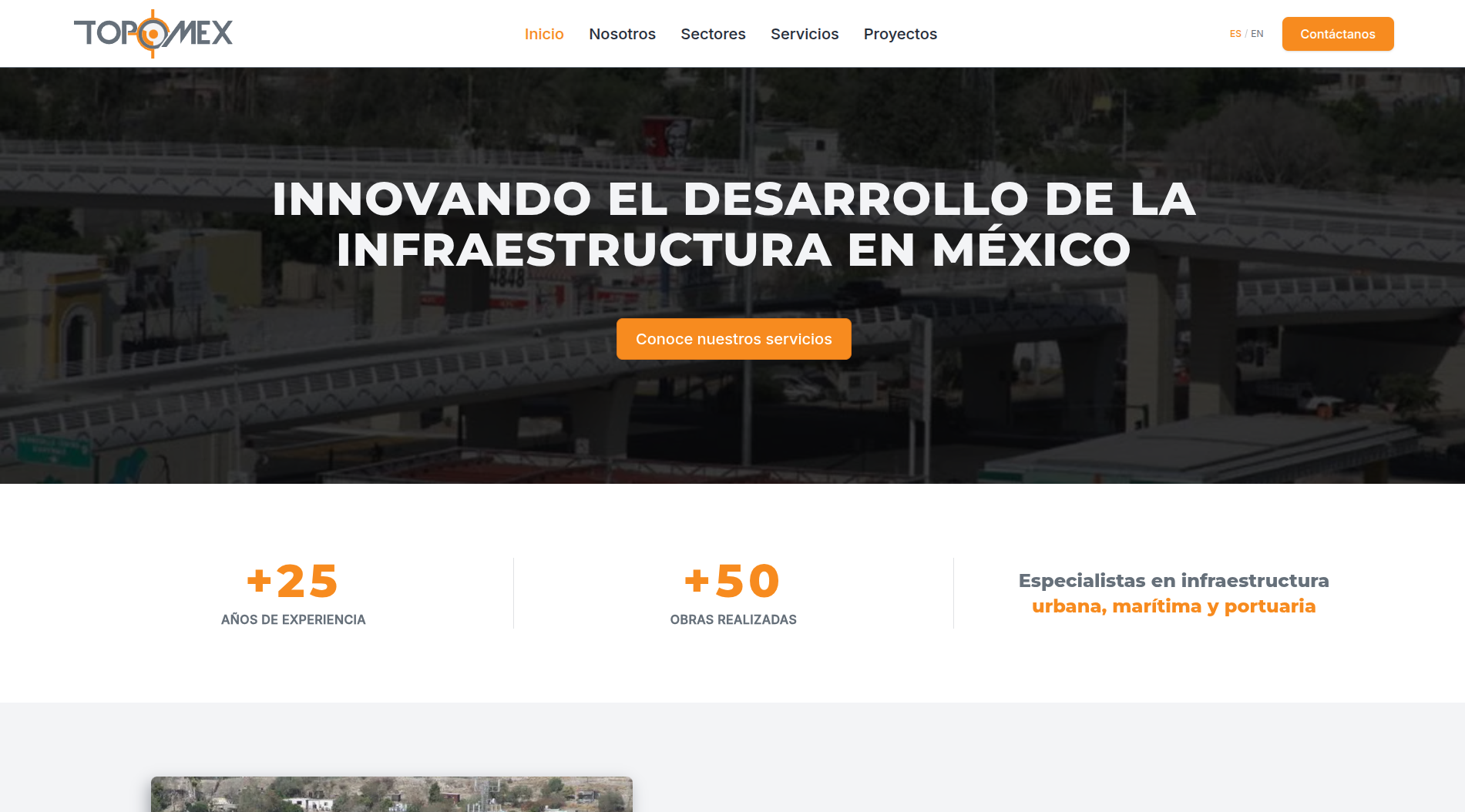
Topomex is a Mexican engineering company preparing to relaunch after several years of inactivity. The company needed a modern website to present its infrastructure services, industry experience, and technical capabilities with the level of clarity expected in its field.
The objective was to create a digital presence for this new stage of the business while organizing a large amount of information without making the website feel dense or difficult to navigate.
The Challenge
Topomex works across multiple infrastructure sectors, each with its own services, terminology, and project experience. The website needed to help visitors quickly understand what the company does, which industries it serves, and why its team is qualified to deliver that work.
The content also needed room to grow. New services, sector pages, and projects had to fit within the existing structure without requiring a separate layout or extensive code changes for every addition.
The Solution
I translated the company’s services and sector experience into a clear information architecture supported by a reusable visual system.
Using Astro, I built a content-focused website that delivers most pages as static HTML and limits client-side JavaScript to the interactions that require it. Tailwind CSS was used to establish consistent rules for typography, spacing, layout, and responsive behavior.
Services, sectors, and projects each have a defined place within the website. Shared components keep recurring patterns consistent and allow new content to be added without rebuilding the interface from scratch.
Technical Approach
Static-First Delivery & SEO Foundations
The website was designed to generate optimized static pages, reducing the amount of JavaScript sent to the browser and keeping loading behavior predictable.
Routes and sitemaps are generated from the website’s content structure, allowing new sector and project pages to become part of the site architecture and available for search engine crawling as they are published.
Reusable Component Architecture
Navigation, section headers, calls to action, project cards, and recurring layout patterns were built as reusable Astro components.
This reduces duplicated markup, keeps visual behavior consistent, and makes future changes easier to apply across the website.
Responsive Design System
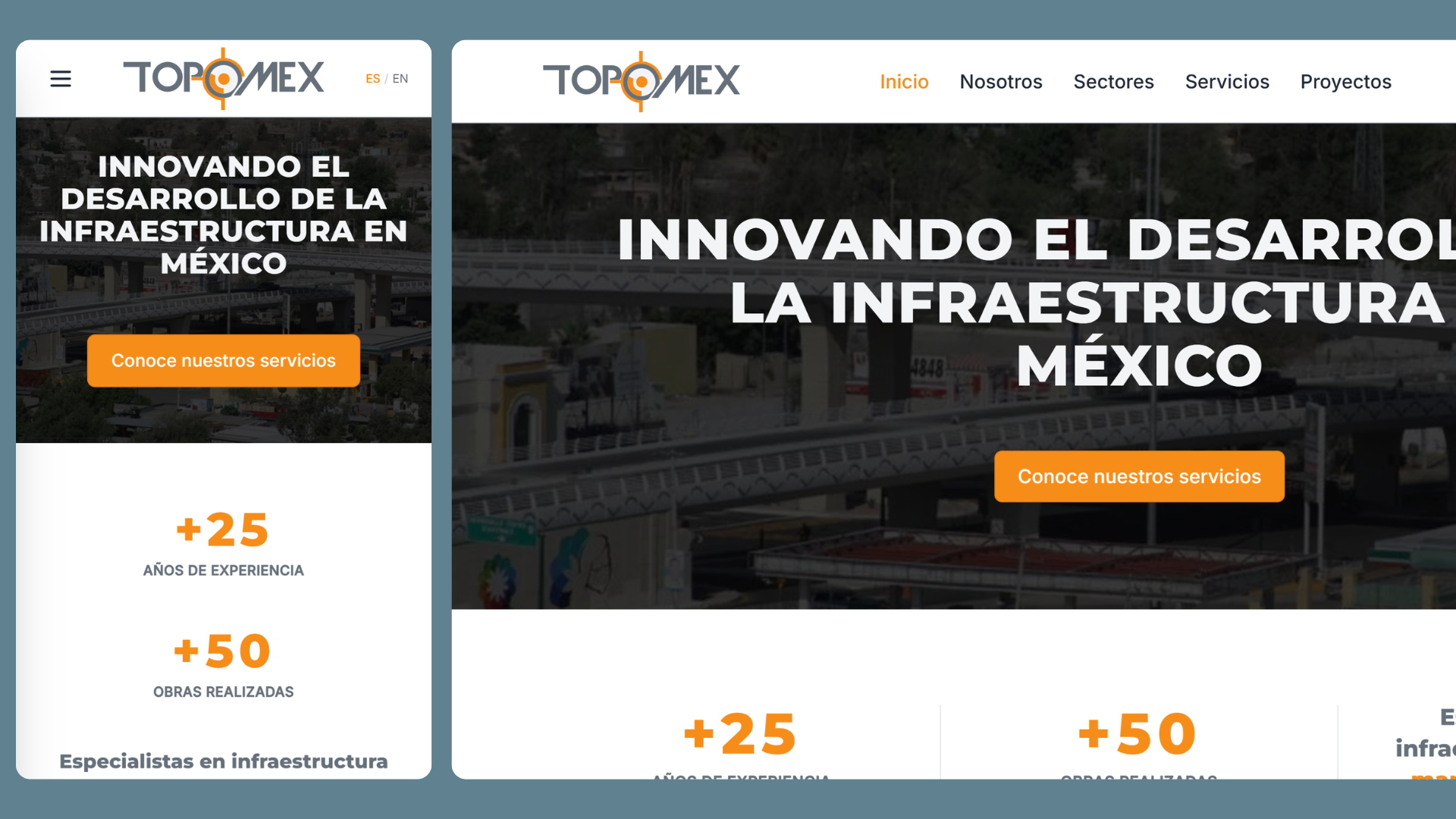
Responsive behavior was defined through shared Tailwind patterns rather than adjusted independently on every page.
The layouts adapt across mobile, tablet, desktop, and wider screens while preserving readable line lengths, content hierarchy, and spacing.
Key Engineering Decisions
- Astro: Selected because the project is primarily content-driven and does not require extensive client-side state.
- Content-based routing: Services, sectors, and projects follow repeatable page structures that can accommodate future additions.
- Automated sitemap generation: New public pages are included in the sitemap as the website expands.
- Centralized design rules: Tailwind CSS keeps typography, spacing, breakpoints, and layout behavior consistent.
- Limited client-side JavaScript: Interactive code is added only where it contributes directly to the user experience.
- Semantic content structure: Pages use meaningful HTML and clear heading hierarchies to support accessibility, navigation, and search visibility.
Outcome
The completed website gives Topomex a clear and professional platform for its relaunch, presenting its services, sectors, and experience within a structure that is easier to navigate and understand.
Its component-based foundation also allows the website to expand as the company adds new projects and areas of work, without introducing a separate implementation for each page.
What the work established
Focused Delivery
The complete corporate platform was structured, implemented, reviewed, and prepared for deployment within a focused delivery window.
Static-First Architecture
Primary content is delivered as pre-rendered HTML, with client-side JavaScript reserved for interactions that genuinely require it.
Scalable Content Structure
Services, sectors, and projects follow reusable patterns that make future content easier to add without redesigning the platform.
Project gallery